Pixels Don't Lie: How Ultra-HD Cameras Are Rewriting the Risk Rules in Extreme Sports
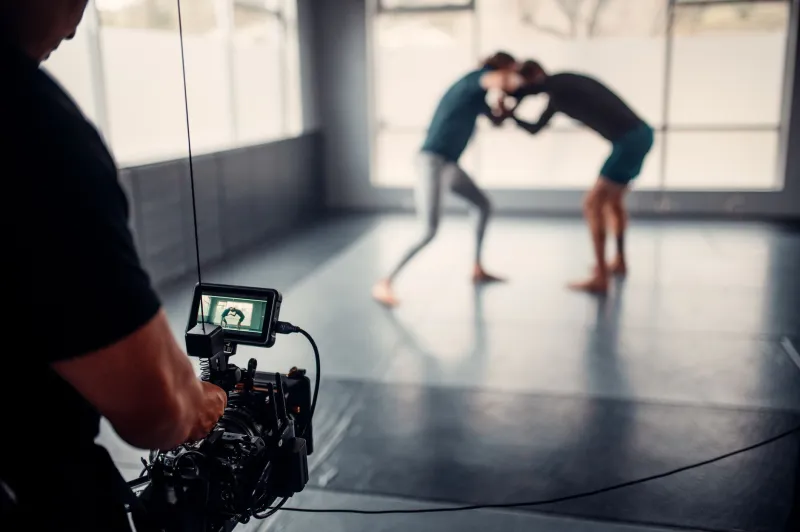
There's a moment every extreme sports filmmaker knows well. You pull the footage up on a monitor after a run, zoom into a corner of the frame, and suddenly see something nobody noticed in real time — a crack in the ice shelf, a loose rock shelf jutting out at knee height, a wind shear pattern rippling through a wingsuit pilot's suit fabric. The athlete didn't die. This time. But the camera caught it all in ruthless, unforgiving detail.
That's the double-edged reality of shooting extreme sports in 4K and 8K. The same technology that makes your living room screen explode with color and clarity is fundamentally reshaping how athletes, coaches, and safety crews think about what's actually possible — and what's actually survivable.
Seeing What the Human Eye Misses
Human vision tops out somewhere around 576 megapixels under ideal conditions, but our brains are lazy editors. We fill in gaps, smooth over inconsistencies, and prioritize motion tracking over fine detail. A camera doesn't do any of that. It just records.
For athletes operating at speed — think downhill mountain bikers hitting 60 mph on raw terrain, or big wave surfers dropping into 50-foot walls of water — that objectivity is genuinely lifesaving. Professional big wave coach and safety consultant Dana Mercer, who works with athletes on the North Shore of Hawaii, describes reviewing 8K drone footage after training sessions as "basically getting a second set of eyes that never blinks."
"We caught a submerged reef formation last season that none of our spotters had flagged," she says. "It showed up in the footage because the resolution was high enough to read the water surface distortion above it. That's not something you see on standard HD. That's an 8K thing."
Similar stories are coming out of the snowboard and freeski world. With cameras like the Sony VENICE 2 and RED V-RAPTOR now accessible to independent film crews, athletes are reviewing runs in frame-by-frame detail that simply wasn't available five years ago. Micro-features in snow — wind crust layers, hidden compression zones, barely-visible terrain traps — show up with enough clarity to actually inform decision-making before the next attempt.
The Footage Feedback Loop
Here's where things get complicated, though. Because the same cameras making it easier to spot hazards are also making it a whole lot easier to see exactly how a trick looks — and whether it looks good enough.
Filmmaker and longtime action sports cinematographer Jesse Torrance, based out of Salt Lake City, has been shooting extreme sports content for over a decade. He's watched the shift from standard HD to 4K to 8K happen in real time, and he's got mixed feelings about where it's landed.
"The footage quality raises the bar visually, which raises the bar for athletes," he says flatly. "When everything looks cinematic, something that's technically impressive but doesn't photograph well just doesn't make the cut anymore. Athletes know that. They feel it."
Torrance describes a pattern he's seen on multiple shoots: an athlete nails a difficult line cleanly, they review it on the monitor, and the reaction isn't relief — it's disappointment. The angle was wrong. The light hit weird. The resolution exposed a wobble in the landing that looked fine in real time but reads as sloppy at full 8K resolution.
So they go again. Except now they're fatigued, and the conditions have shifted, and that second or third attempt is statistically more dangerous than the first.
"Better cameras can mean more takes," Torrance says. "More takes means more exposure. It's not complicated math, but nobody wants to say it out loud."
The Athlete's Perspective
Ask athletes directly, and you get a more nuanced picture. Most serious competitors in disciplines like freeride skiing, BASE jumping, and big air snowboarding will acknowledge that ultra-HD footage has become a legitimate training tool — not just a marketing asset.
Colorado-based freeride skier Mara Voss uses slow-motion 4K replay as part of her regular training protocol. "Watching yourself ski at 120 frames per second in high resolution is humbling," she laughs. "You think your technique is dialed, and then you see exactly what your hips are doing on a steep roll and you realize you've been getting away with something for years."
But Voss also acknowledges the aesthetic pressure is real. "The audience for this content has gotten so sophisticated. They've watched thousands of hours of beautifully shot extreme sports. They can tell when something is incredible and when it's just good. And 'just good' doesn't really cut it anymore."
That audience sophistication is, in large part, a product of the same camera technology. When XtremeHD and platforms like it serve up 4K streams of athletes doing legitimately insane things, it recalibrates viewer expectations. What looked death-defying in 720p starts looking almost casual in crisp 8K detail. The danger is still there — it just doesn't read the same way visually.
Safety Tech Is Catching Up — Slowly
The good news is that the sports science community isn't just watching this dynamic play out passively. Some of the same high-resolution imaging tools are being adapted for real-time hazard detection rather than post-session review.
Researchers at several US university sports science programs are experimenting with AI-assisted camera systems that can analyze terrain in high resolution and flag potential hazards before an athlete commits to a line. Think of it as a collision-detection system, but for mountains. The technology is still early-stage, but the underlying logic is sound: if the camera can see it, software can flag it.
Meanwhile, helmet-mounted 4K cameras with integrated gyroscopes are giving safety crews real-time data on impact forces and head movement during crashes. When something goes wrong at high resolution, the forensic value for both medical response and future safety planning is significant.
"The same resolution that makes the crash look spectacular also gives us the most detailed crash reconstruction we've ever had," says sports biomechanics researcher Dr. Kelvin Osei, who consults with several US action sports federations. "We can see exactly what happened and why. That's not nothing."
A Tool, Not a Safety Net
At the end of the day, a camera — no matter how many pixels it pushes — doesn't make a cliff any shorter or a wave any smaller. The fundamental physics of extreme sports don't care about frame rates.
What ultra-HD technology does is change the information environment around risk decisions. It gives athletes and their teams more data, more visibility, more detail. Whether that translates into safer outcomes or just more ambitious attempts depends entirely on the culture surrounding how that information gets used.
Right now, that culture is pulling in both directions at once. The same footage that saves lives by revealing invisible hazards is also feeding a visual arms race that pushes athletes toward bigger, cleaner, more cinematic stunts. It's not a contradiction — it's just the complicated reality of living at the intersection of technology and adrenaline.
The camera doesn't decide what's worth risking. The athlete still does. But the camera is definitely in the room when that decision gets made.