Dead Zones and Dying Feeds: Why Extreme Sports Streaming Breaks Down Where It Matters Most
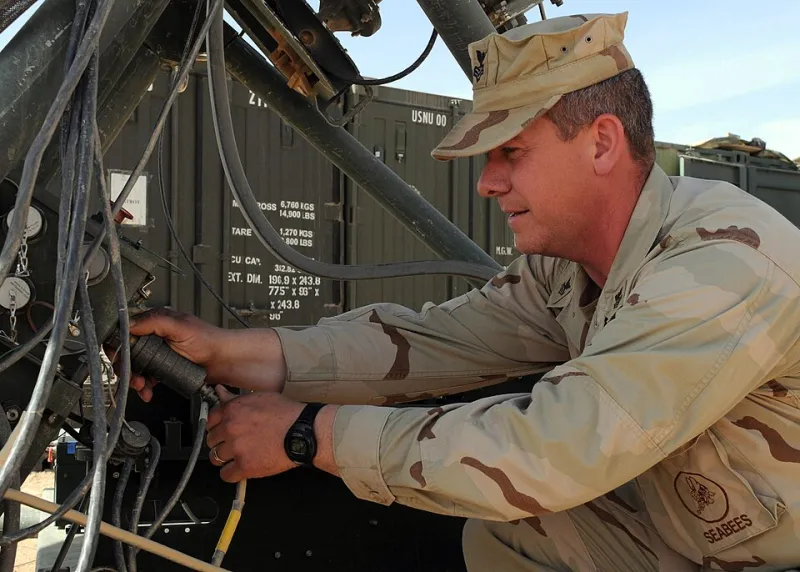
Photo: U.S. Navy photo by Mass Communication Specialist 2nd Class Michael B. Lavender, Public domain, via Wikimedia Commons
You're watching a backcountry skier drop into a couloir so steep it barely looks real. The HD feed is buttery smooth, the commentary is live, the moment feels electric — and then it freezes. Buffers. Cuts to a loading spinner. By the time the stream recovers, the rider is already at the bottom, and you missed every second of it.
This isn't a rare glitch. It's a structural problem baked into the DNA of extreme sports broadcasting, and it's getting harder to ignore as athletes keep pushing into environments that modern streaming infrastructure was never designed to handle.
The Geography Problem Nobody Wants to Talk About
Extreme sports, almost by definition, happen in places humans aren't supposed to be. The Rockies. The Mojave. The open Pacific. The top of a Peruvian volcano. These aren't locations where a telecom company is rushing to lay fiber or erect cell towers. And yet, the entire business model of modern action sports content depends on delivering high-definition footage from exactly these spots in real time.
The math just doesn't work out.
"We were filming a wingsuit proximity run in a canyon system in Utah — absolutely no cell coverage, no fixed infrastructure, nothing," said one independent action sports streamer who's been covering fringe disciplines for nearly a decade. "We had a satellite uplink rig that cost more than my car, and we were still dropping frames every thirty seconds. The audience thought something was wrong with their internet."
It wasn't their internet. It was the sky.
Geostationary satellites — the ones that have powered remote broadcasting for decades — sit roughly 22,000 miles above Earth. That distance introduces latency and signal degradation that no amount of compression wizardry can fully fix. Add atmospheric interference from mountain weather systems, and you've got a recipe for the kind of pixelated, stuttering footage that makes even the most patient viewer tap out.
Low-Earth Orbit Was Supposed to Fix This
The arrival of low-Earth orbit satellite constellations — Starlink being the most prominent example — generated serious buzz in the extreme sports production community. LEO satellites orbit at altitudes between 200 and 1,200 miles, dramatically cutting latency and improving signal reliability. On paper, it sounded like the answer.
In practice, it's more complicated.
"Starlink works great when you've got a clear sky view and a stable setup," explained a technical producer who's worked on several major freeride mountain bike events in remote western US locations. "But when you're on a moving platform — a boat, a chase helicopter, a snowmobile — the dish struggles to maintain lock. And when the weather rolls in on a mountain, you're still dealing with the same interference issues you had before."
There's also the cost barrier. A full Starlink Business setup capable of supporting broadcast-quality uplink runs thousands of dollars in hardware alone, plus monthly service fees that make smaller production outfits sweat. For the independent streamers and athlete-run channels that have become the backbone of niche extreme sports coverage, that's a significant ask.
The Safety Tradeoff Nobody's Talking About Loudly Enough
Here's where the story gets genuinely uncomfortable. Athletes in remote environments aren't just choosing between good coverage and bad coverage — they're sometimes choosing between coverage and safety.
Satellite communication systems that serve as emergency beacons and coordination tools for backcountry teams share bandwidth and hardware resources with the rigs being used for streaming. When production crews push their uplink equipment to its limits chasing broadcast quality, they're occasionally doing so at the expense of the reliable, low-bandwidth communication channels that keep athletes alive.
"There was a moment during a big mountain skiing event where we had a rider take a hard fall in an area with marginal signal," recalled one event safety coordinator who asked not to be identified by name. "The production team's streaming setup was saturating the available satellite bandwidth, and our rescue coordination channel was basically unusable for about four minutes. Four minutes doesn't sound like a lot until someone's not moving at the bottom of a slope."
No one was seriously hurt that day. But the incident prompted a quiet internal review that most people outside the production team never heard about.
Mesh Networks and Drone Relays: The DIY Fix
Where commercial infrastructure has failed, extreme sports communities have started building their own solutions — and some of them are genuinely impressive.
Mesh networking technology, originally developed for military applications and disaster relief scenarios, allows a series of small nodes to create a localized wireless network that can extend coverage across terrain that would otherwise be a dead zone. Several enduro mountain bike race organizers in the western US have begun experimenting with mesh deployments along race courses, placing solar-powered nodes every half mile or so to stitch together a coverage corridor through otherwise unreachable terrain.
Drone relay systems are another emerging approach. Rather than trying to punch a signal directly to a satellite, a tethered or semi-autonomous drone hovering at altitude acts as an airborne repeater, boosting the signal from ground-level cameras up to a satellite link or a distant base station. The technology is still rough around the edges — battery life and FAA airspace regulations are both significant constraints — but early results from a handful of big wave surfing events off the California coast have been promising.
"We flew a relay drone at about 400 feet during a swell event last winter and pulled off a two-hour continuous live stream from a location where we'd never gotten more than ten minutes of stable footage before," said one cinematographer who's been testing the approach. "It's not cheap and it's not easy, but it works."
What Audiences Are Actually Losing
Beyond the technical frustration, there's a real cultural cost to remote signal failure that deserves acknowledgment. Some of the most significant moments in modern extreme sports history have happened in places where coverage collapsed at the worst possible time. Runs that would have gone viral. Crashes that would have sparked important safety conversations. Performances that athletes trained years for, witnessed by nobody because a satellite dish couldn't hold a lock.
The athletes feel it acutely. "I did the best run of my life on a course in Alaska two years ago," said one competitive freeskier. "Nobody saw it live. The replay footage from the backup camera was 480p and shaky. That's what exists of that moment. It's a little heartbreaking."
The infrastructure will eventually catch up — it always does. But until it does, the most extreme corners of the planet are going to keep eating feeds, dropping frames, and reminding everyone that the real world doesn't care about your bandwidth requirements.