Frames Per Second, Dollars Per Click: Why Streaming Tech Is Now the Real Gatekeeper of Extreme Sports Glory
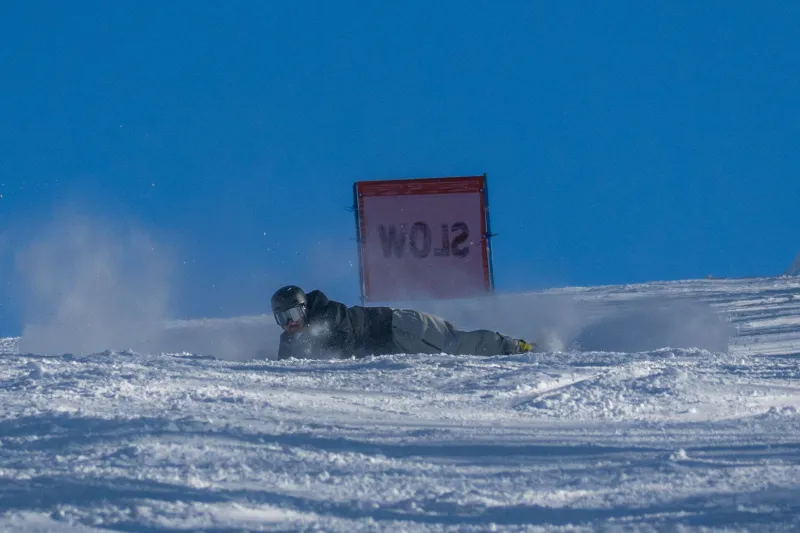
Picture this: a freeskier launches off a 90-foot kicker in the backcountry of Utah, rotates through a clean 1440, and stomps the landing with the kind of precision that should have the internet losing its collective mind. Except the stream was running at 30fps with aggressive compression artifacts, and by the time the clip hit social, it looked like someone filmed it through a screen door. Zero virality. Zero sponsor calls. Just another clip that died in the algorithm.
This isn't a hypothetical. It's happening constantly, and the athletes who understand why are starting to get very, very loud about it.
The Human Eye Doesn't Lie — But Your Stream Might
Here's the science that matters. Human vision processes motion smoothly up to roughly 150 frames per second under ideal conditions, though most people can detect meaningful differences between 60fps and 120fps without any special training. When extreme sports content gets captured and delivered at 120fps, the brain receives enough temporal information to accurately reconstruct the speed, trajectory, and physical difficulty of what it's watching.
Drop that to 30fps — the longtime broadcast standard and still the default for a depressing number of streaming platforms — and something genuinely weird happens neurologically. The brain fills in the missing frames with interpolated guesses. Fast-moving subjects blur. Impact moments smear. The split-second hang time of a BMX barspin that should read as effortless athleticism instead looks choppy and mechanical. The flinch reflex that makes extreme sports content so addictive — that involuntary gut-drop when you watch someone drop into a near-vertical chute — gets blunted almost entirely.
In plain terms: bad frame rates make hard tricks look easy and dangerous stunts look sloppy. That's a catastrophic problem for athletes whose entire brand is built on making the impossible look both terrifying and controlled.
8K Is Coming Whether Platforms Are Ready or Not
Resolution is the other half of this equation, and the conversation is moving faster than most broadcasters want to admit. 4K became the baseline expectation for serious action content sometime around 2019. By 2022, RED cameras shooting 8K RAW had become standard issue on high-end productions like the Dew Tour and Red Bull's in-house content machine. Now the question isn't whether 8K is overkill — it's whether platforms can actually deliver it without turning your living room TV into a slideshow.
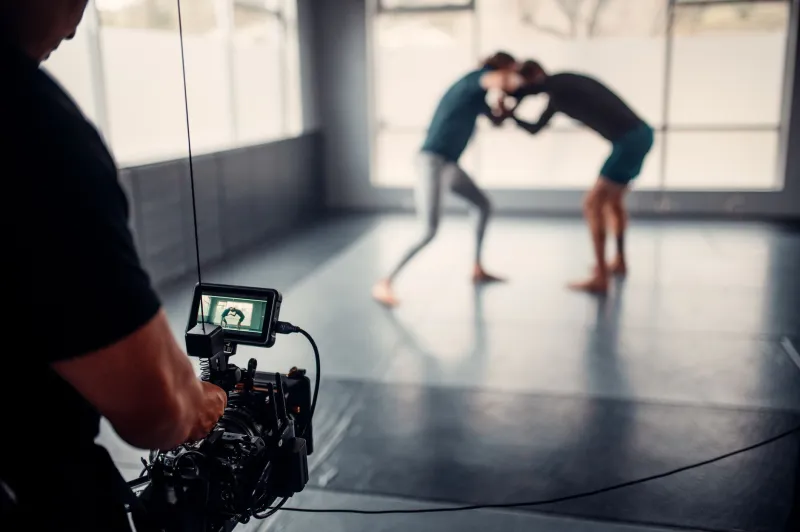
The thing about 8K that makes it genuinely transformative for extreme sports specifically — and not just a spec sheet flex — is the reframe capability. Shoot in 8K, deliver in 4K, and you've got enough pixel real estate to reframe, zoom, and stabilize in post without ever touching visible quality. For sports where the action can shift direction in a fraction of a second, that's not a luxury. It's operational necessity.
Red Bull TV has been quietly pushing this envelope for a couple of years now. Their cliff diving and mountain biking productions have used 8K acquisition pipelines to pull reaction shots, crash recoveries, and crowd moments from footage that was originally pointed somewhere else entirely. The result is a broadcast product that feels genuinely live and reactive even when it's been heavily edited. That's the magic trick 8K makes possible.
Latency: The Problem Nobody Talks About Until It Costs Them
Frame rate and resolution get most of the press, but low-latency encoding might actually be the most financially consequential technical variable in extreme sports streaming right now. Here's the uncomfortable math.
When a major competition event — say, the X Games or a Red Bull Rampage — streams with standard broadcast latency of 30 to 45 seconds, the live social conversation is already happening before most viewers have seen the moment. Someone watching in person posts the crash. The reaction wave crests. By the time the stream catches up, the emotional peak has passed, and the clip's viral window has narrowed dramatically.
Low-latency streaming protocols — specifically HLS-LL (Low Latency HLS) and DASH-LL — can bring that delay down to under five seconds. For extreme sports, where the entire value proposition is the shared experience of witnessing something insane in real time, that difference is enormous. Platforms that haven't made the infrastructure investment to support sub-10-second latency are actively bleeding audience engagement every time something worth watching actually happens.
Industry estimates — admittedly rough ones, since nobody in sports media loves publishing their own failure metrics — suggest that frame-rate failures and high-latency delivery combined have cost major sports broadcasters somewhere north of $200 million in lost advertising value over the past three years. That figure comes from missed viral moments that were captured but delivered poorly, sponsor activations tied to peak viewership numbers that never materialized, and audience churn from viewers who rage-quit buffering streams and never came back.
Athletes Are Paying Attention — and Starting to Negotiate
The most interesting development in this space isn't happening in broadcast towers or streaming platform engineering departments. It's happening in athlete contract negotiations.
A growing cohort of top-tier action sports athletes — skiers, skaters, mountain bikers, wingsuit pilots — are now including streaming quality clauses in their sponsorship and broadcast agreements. The language varies, but the demand is consistent: minimum 60fps delivery, 4K resolution floor, and documented latency standards for any live event content featuring their likeness.
This isn't vanity. It's brand protection. When your entire competitive identity is built on performing movements that look different — genuinely, measurably different — at higher frame rates, agreeing to be broadcast in potato quality is the equivalent of a musician agreeing to have their album released only on AM radio. The art doesn't translate. The audience doesn't connect. The career trajectory flattens.
Colorado-based freeskier and longtime XtremeHD favorite Marcus Holloway put it bluntly in a recent interview: "I've landed tricks that should have broken the internet and watched them die because the stream looked like it was shot through a security camera. I'm not doing that anymore. If a sponsor can't guarantee the quality, they can't guarantee my name on their product."
The Platform Arms Race Is Already Underway
Spotify got into video. YouTube upgraded its live streaming infrastructure for the third time in two years. Amazon's live sports ambitions are barely contained. And every single one of them is circling the extreme sports content space with checkbooks open, because the demographic overlap between action sports fans and premium streaming subscribers is almost perfect.
What separates the platforms that will win this audience from the ones that won't has very little to do with licensing fees or exclusive deals. It has everything to do with whether the technical delivery matches the ambition of the content. You cannot stream a wingsuit pilot threading a two-meter gap at 150 miles per hour in 480p with 45-second latency and expect the audience to feel anything except frustrated.
The flinch factor — that visceral, involuntary physical response that makes extreme sports content so uniquely compelling — is not just a product of what athletes do. It's a product of how faithfully the technology reproduces what they do. Frame rate, resolution, and latency aren't specs. They're the difference between content that makes people grab their armrests and content that makes people grab their phones to scroll something else.
The athletes already know this. The smart platforms are figuring it out. The ones still arguing about whether 60fps is "good enough" are about to find out exactly how expensive that opinion is.