Cold Is the New Gold: How Winter Disciplines Are Stealing the Extreme Sports Spotlight
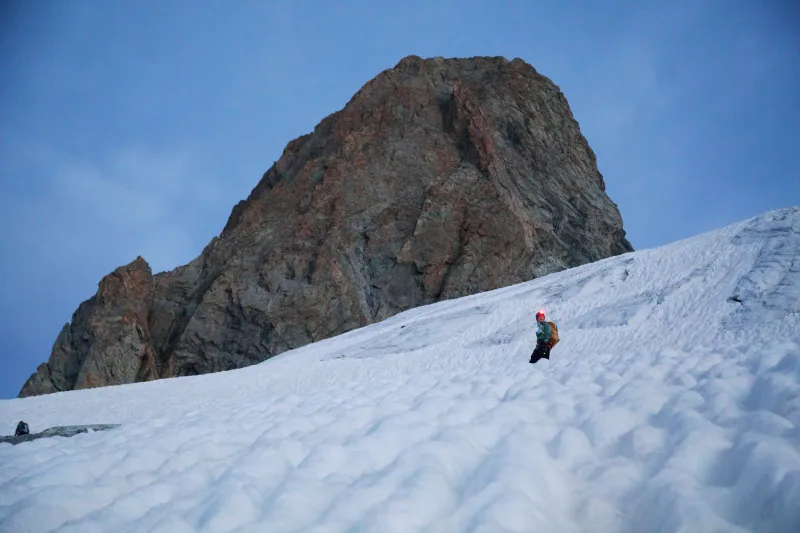
There's a moment in late October when the trailheads empty out and the ski lifts haven't opened yet. Most athletes pack it in. A smaller, increasingly deliberate group laces up crampons, straps on a split board, or starts scouting frozen waterfalls. They're not training for something else. This is the thing.
Winter extreme sports have quietly undergone a strategic revolution. What used to be an off-season placeholder — something to stay sharp before the real action kicked back in — has become a full-blown competitive arena. And the athletes leading the charge aren't doing it by accident.
The Summer Ceiling Nobody's Talking About
For years, summer dominated the extreme sports calendar. Skateparks, mountain bike trails, and big-wave surf windows all clustered around warm months, which meant the talent pool was maxed out and sponsorship dollars were already spoken for. Getting noticed in July at a major event? You're competing against a hundred other athletes with polished reels and existing brand deals.
Flip to February. The field thins dramatically.
"I realized I was a medium-sized fish in a massive summer pond," says Dax Merrill, a 26-year-old from Bozeman, Montana, who pivoted from competitive mountain biking to backcountry skiing and ice climbing three years ago. "Come winter, I'm suddenly one of maybe fifteen people in the country doing what I'm doing at this level. That math changes everything."
Merrill's logic isn't just anecdotal. Sports marketing analysts have noted that sponsorship activation in winter extreme disciplines — specifically ice climbing, backcountry skiing, ski BASE jumping, and frozen waterfall rappelling — has grown significantly in the past four years. Brands that couldn't break through the noise in summer are finding winter offers a quieter, more targeted lane.
The Viral Physics of Frozen Terrain
There's also something undeniably cinematic about extreme sports in winter. The visual contrast is brutal and beautiful at the same time — a human figure in a snowstorm, an ice axe catching light on a vertical wall, a skier dropping into a couloir with nothing but white silence below. That imagery hits differently on a scroll.
"Winter content performs," says Priya Nolan, a sports content strategist based in Denver who's worked with several action sports brands. "There's a texture and a drama to it that summer clips sometimes lack. When someone sends an ice climbing video, people stop and watch. It triggers something primal."
The science backs that up. Research in visual attention psychology suggests that high-contrast environments — like a lone figure against a snow-white backdrop — capture sustained viewer focus more effectively than busy or familiar visual settings. In a content economy where the first two seconds decide everything, winter extreme sports have a built-in edge.
Social platforms have taken notice too. Short-form video algorithms have been observed surfacing winter extreme content at higher engagement rates during Q4 and Q1, partly because the content is less saturated and partly because the novelty factor spikes user interaction.
What the Body Actually Goes Through
Here's where the Extreme Science angle gets genuinely wild. The human body operating at the edge of its limits in sub-zero environments is doing something fundamentally different from warm-weather performance — and sports scientists are only beginning to map it out.
Dr. Camille Ostrowski, a sports physiologist at the University of Colorado Boulder who consults with several backcountry athletes, explains that cold exposure at high intensity creates a unique physiological cocktail. "You're dealing with vasoconstriction competing directly with the demands of maximum exertion," she says. "The cardiovascular system is working overtime to keep core temperature stable while simultaneously fueling muscles that are screaming for blood flow. It's a genuine tug-of-war happening inside the body."
Frostbite risk isn't just about air temperature. Sweat accumulation, wind chill at speed, and the sustained grip required for ice climbing all accelerate heat loss from extremities in ways that athletes often underestimate. Merrill describes losing sensation in two fingers during a technical ice climb in Ouray, Colorado, last January — not from neglect, but from the sustained grip pressure required on his tools.
"Your hands are doing this constant micro-work that cuts circulation," he says. "By the time you feel the tingle, you're already behind."
Sports scientists are developing cold-specific training protocols that go beyond just dressing in layers. Breath control, pre-warming routines, and even dietary timing are being studied for their impact on performance in frozen environments. Some athletes are experimenting with cold-water immersion training in summer specifically to prep their vascular systems for winter demands — essentially stress-testing the body's thermal regulation before the stakes get real.
Climate Change Is Rewriting the Calendar
Here's the twist nobody fully expected: climate change, while threatening traditional winter sports at lower elevations, is actually extending high-altitude winter windows in some regions. Snowpack in parts of the Rocky Mountains and the Cascades has shifted, creating longer viable seasons for backcountry skiing and alpine climbing above certain elevations.
"The shoulder seasons are getting weirder," says Nolan. "But for athletes who know how to read terrain and conditions, that weirdness is opportunity. A climbable ice route in early November used to be rare. Now it's happening more often at the right elevations."
For sponsors, that extended window is a legitimate business case. A winter campaign that used to run ten weeks can now stretch to fourteen or fifteen in some disciplines, improving return on investment and giving athletes more time to generate content and competition results under a brand's banner.
The New Arms Race
What's emerging looks less like a seasonal trend and more like a structural shift. Athletes are investing in winter-specific technical skills the way a previous generation invested in gym time — deliberately, strategically, and with an eye on market positioning. Coaching for ice climbing and backcountry navigation is increasingly being sought by athletes with summer backgrounds who see the whitespace.
Gear brands are responding. Several major outdoor equipment companies have quietly expanded their technical winter lines in the past two years, and at least two action sports apparel brands have launched winter-specific athlete ambassador programs targeting the exact demographic Merrill represents: skilled, social-media-savvy, and operating in a less crowded space.
For viewers tuning in on XtremeHD, the payoff is obvious. Winter extreme content brings a rawness that's hard to manufacture — real consequence, real cold, real terrain that doesn't forgive mistakes. The athletes pioneering this shift aren't just chasing a trend. They're betting that the frozen edge is where the next chapter of action sports gets written.
And judging by the view counts? The audience is already there waiting.