Grain Over Glory: The Athletes and Filmmakers Choosing Grit Over 4K
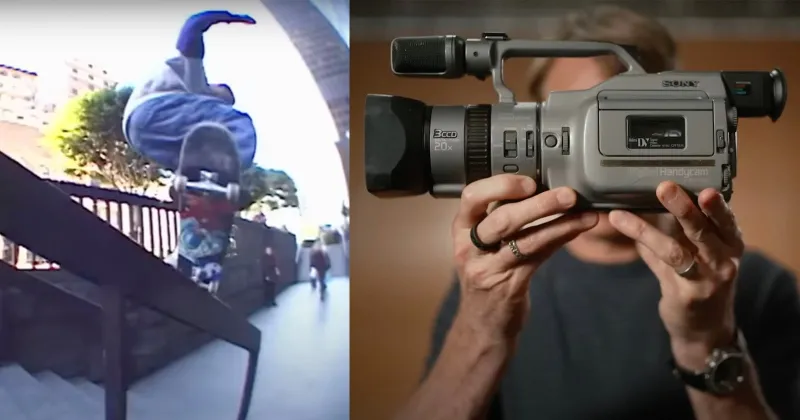
Photo: skateboarder filming VHS camcorder street skating vintage camera, via petapixel.com
The setup sounds almost like a joke. One of the most technically gifted street skaters in the country is preparing to attempt a trick that maybe five people on Earth could land. The filmer is ready. The camera is a mid-90s VX1000, the same consumer-grade MiniDV camcorder that documented the golden era of skateboarding before anyone knew what a megapixel was. The image quality is, by any modern technical standard, terrible.
The footage, when it comes out, is electric.
This isn't an isolated incident or a quirky one-off. Across skateboarding, snowboarding, mountain biking, and even some corners of surf culture, a deliberate low-fi movement is gaining traction among athletes and filmmakers who've grown genuinely frustrated with what ultra-high-definition production has done to the soul of action sports content.
The Pixel Arms Race and Its Casualties
To understand why some of the most respected people in extreme sports are voluntarily stepping backward in terms of image quality, you have to understand what the relentless push toward 4K — and now 8K — has actually done to the content.
High-resolution cameras are extraordinarily revealing. Every imperfection in a landing, every slight hesitation in a line, every moment of doubt in a rider's body language is captured and preserved in forensic detail. That can be incredible when things go perfectly. But it's also created an aesthetic pressure that's quietly changed how athletes approach their craft for the camera.
"When everything is in 4K slow motion, there's this expectation that it's going to look perfect," said one professional snowboarder who's been deliberately shooting with older cameras for the past two seasons. "Riders start thinking about how they look rather than what they're doing. The footage starts feeling like a product shoot instead of a skate video. Something gets lost."
What gets lost, according to a growing chorus of athletes and filmmakers, is the rawness that made extreme sports footage compelling in the first place.
The VX1000 Is Not a Prop
For skate culture specifically, the conversation around lo-fi filmmaking isn't really new — it's a restoration. The VX1000, released by Sony in 1995, is basically the camera that documented the birth of modern street skating. Almost every iconic skate video from the late '90s and early 2000s was shot on that camera or something similar. The fish-eye lens, the slight warp at the edges, the way the image blooms slightly in bright sunlight — that look is deeply embedded in skateboarding's visual DNA.
Several recent independent skate projects shot on original VX1000 units have generated significantly more engagement and critical conversation than technically superior productions released in the same window. The comment sections on these videos read less like typical social media reactions and more like genuine aesthetic arguments about what skateboarding should look like.
"People keep saying it's nostalgia," said one filmmaker who's made three skate videos on vintage equipment in the last four years. "But the kids watching these videos weren't alive when this stuff was originally shot. It's not nostalgia for them. They just think it looks right. They think it feels true."
Super 8 on the Mountain
The lo-fi impulse isn't limited to skateboarding. In snowboarding — a discipline with its own rich tradition of irreverent, punk-influenced filmmaking — a handful of high-profile athletes have started insisting on film-based documentation for at least portions of their projects.
Super 8 film, the format that home movie makers used in the '60s and '70s before video took over, has found an unlikely second life as an extreme sports filmmaking tool. The format's inherent limitations — short rolls, no immediate playback, visible grain, slightly unpredictable exposure — force a different relationship between athlete and camera.
"When you're shooting on Super 8, you can't just hit record and let it run for an hour," explained one snowboard filmmaker who's incorporated film into several recent projects. "You have maybe three minutes per roll. You have to be intentional. The athlete knows you're burning film on them, so they're intentional too. The energy on set is completely different."
The practical constraints, paradoxically, often produce better footage. Not technically better — but better in the sense of being more alive, more present, more honest about the fact that a human being is doing something genuinely difficult and uncertain.
When Constraints Become Creative Tools
There's a well-established principle in creative fields that limitations often drive better work than unlimited resources. Extreme sports filmmaking is proving to be no exception.
Filmmakers working with lo-fi equipment have to get closer to the action, think harder about angles, and make real-time decisions that can't be corrected in post-production. The resulting footage tends to have an immediacy that technically pristine production often lacks. When you can't fix everything in editing, you have to get it right in the moment — and that urgency translates directly to the viewer.
"I spent two years shooting everything in 6K with a full drone package and gimbal stabilization," said one mountain bike filmmaker based in the Pacific Northwest. "The footage looked incredible. It also looked like a commercial. I started getting feedback that people couldn't tell my videos apart from brand content. That freaked me out."
He's now shooting a significant portion of his work on a beat-up consumer camcorder he bought for forty dollars at a garage sale. His latest video has more views than anything he produced during his ultra-HD phase.
The Authenticity Argument
At the core of the lo-fi movement is a debate about what extreme sports content is actually for. The ultra-HD production model implicitly argues that the footage should be as impressive as the performance — that the goal is to show the audience something they couldn't otherwise see, rendered in maximum detail.
The lo-fi counter-argument is that extreme sports footage isn't supposed to be a technical showcase. It's supposed to make you feel something. Fear, excitement, the specific joy of watching someone do something that seems impossible. And that feeling, the argument goes, is often better served by an image that has some texture and imperfection to it — an image that feels like it was made by a person in a moment, not rendered by a machine.
"The best skate footage I've ever seen doesn't look clean," said one professional skater who's shot with everything from iPhones to Red cameras over the course of his career. "It looks like someone who cared was there with a camera when something real happened. That's what I want my stuff to look like."
The extreme sports world has always had a complicated relationship with polish. Too much of it and you lose the underground credibility that made the culture worth caring about in the first place. The athletes and filmmakers embracing lo-fi production aren't rejecting quality — they're arguing about what quality actually means. And judging by the audiences responding to their work, that argument is far from settled.